There are a number of options for finishing steel products, however some of our gates are only available powder coated. We’ll let you know if this is the case when you ask us for a quote. The basic finishes we offer are powder coating, raw steel, hot dip galvanising, natural/beeswax finish.
Powder coating
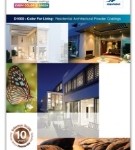
Click to view colour chart
Powder coating is our preferred method of finishing. It’s much tougher and long lasting than paint.To view a colour chart phone Interpon Powder coatings on 1800 630 516 and ask them to post you a D1000 Industrial colour chart. Once you get your Colour chart take it to where your item is going to be (inside or outside) to view colour in the actual light it will be under.
What colours do you offer?
Our quotes include most of the paint colours from the ‘Excel Colourbond‘ & ‘Living Series‘ – quotes DO NOT include metallic, pearlescent and textured finishes. If you want any of those finishes then please let us know so we can check availability and can factor it into your quote.
I’ve heard that powder coating is inferior to paint. Is this true?
No it’s not. Unfortunately some dodgy powder coaters only apply a single coat of colour directly to the steel so it’s prone to flaking and chipping. Unfortunately this has given the industry a bad name. After going through a number of contractors we found a reliable and ethical contractor who does the job properly.
Powder coated products go through a three step process where your item goes in the oven twice, giving you a much better finish:
- Sandblasting: the item is sandblasted to remove any mill scale and dirt, as well as giving galvanised materials some ‘tooth’ so that the primer sticks.
- Zinc rich primer is applied and baked on at approximately 200C.
- Powder coat colour: The colour is applied and baked on.
If the paintwork is looked after (just as you would your car) the finish should look good for about 10 years. Should the item be scratched, it can easily be touched up with ‘touch up paint’.
Unpainted/raw finish
Rusty look:
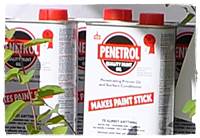
Coat rusty items with Pentrol.
Some items are made from what is known as ‘black’ steel. This doesn’t mean it’s black, it means that the steel has not been treated, e.g. galvanised and will rust when exposed to the elements. Some ‘black’ steel comes with a light protective paint coating (usually blue) which wears off after some time. Many people like their items to look ‘old & rusty’. If you want your item to rust evenly we recommend that the item be sandblasted. If you’re not fussy then just leave it out in the weather and it will rust naturally after a few months. How long this takes depends on your climate.
Steel will continue to rust if it’s not sealed. If you’re after the rusty look, then we suggest you let it rust up to the patina you like and then seal it with a product such as ‘Penetrol’. This will need to be reapplied annually. For more detailed instructions click here.
Unpainted-Galvanised steel:
Silver/galv finish: Some items such as the pipe gates are made from pre-galvanised or zinc coated steel. Galvanising protects the steel against rust however welds and some sections made from mild steel, e.g. wrought iron toppers will still be prone to rust. Heat breaks down the galvanising so gates and arches made from galvanised pipe have the welds and any areas of mild steel coated with a zinc rich primer (ColdGalv) before they leave the workshop. This gives a degree of short term protection however rust is inevitable on steel items. How quickly this happens depends on the amount of moisture in any given environment. When items are offered in a ‘silver/galv finish’ this is what we’re referring to – pre-galvanised pipe, unpainted with the exception of some cold galv on rust prone areas. Areas showing rust break through are quickly remedied with a spray of ‘Bright zinc’ paint.
Hot dip galvanising
Hot dip galvanising is an additional process to ‘rust proof’ items. The only way to completely ‘rust proof’ steel is to have the finished item hot dipped. Hot dip galvanising involves dipping the finished item in a bath of molten zinc. The pros for this method are that you will not need to rust proof the item for several decades. However the cons are:
- due to the heat of the bath, there may be some warping of the steel, therefore some items are not suitable for this process;
- holes need to be drilled into the pipe to let any air escape;
- the finish can be rough and lumpy.
Galvanised items can be painted or powder coated, but an appropriate etching primer must be used prior to application of paint. The cost of hot dip galvanising is about the same as powder coating alone.
Natural Finishes
Wax & Linseed Oil
These natural finishes can only be used on wrought iron for indoor use. The wrought iron item is steel brushed while hot to remove any scale and then wax or oil is applied while the item is still hot. We use a specially formulated mixture of natural waxes and oils which has a silky finish and pleasant aroma.
The natural patina of steel is preserved without the need to paint. Both Linseed oil & beeswax give a lovely lustre and finish.